If you've ever wondered what keeps your lotion smooth, your pills easy to swallow, or your industrial fluids running without friction — chances are, a compound like polyethylene glycol oleate (PEG oleate) is quietly doing the job. It doesn't get much attention, but it shows up in more places than you'd expect.
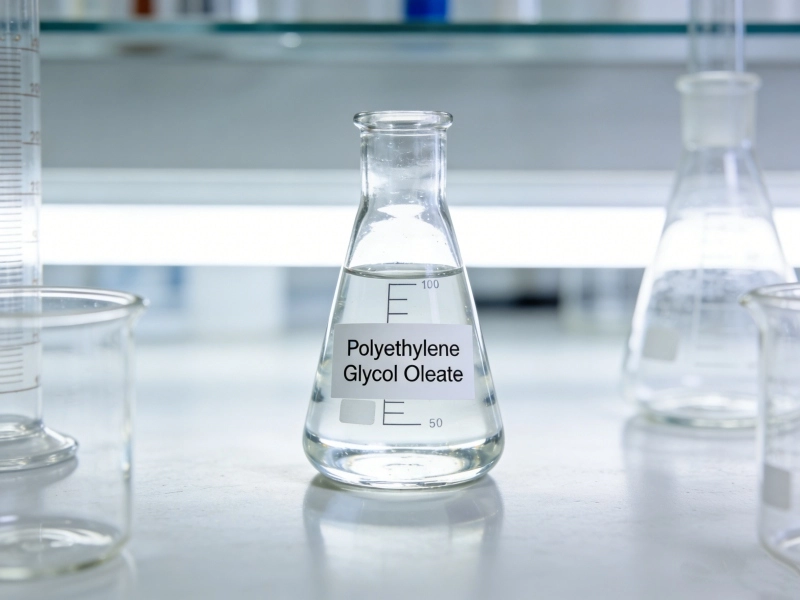
Polyethylene glycol oleate is made by combining oleic acid — a fatty acid found naturally in olive oil — with polyethylene glycol (PEG). The result is a waxy, mild substance that's part oil, part water-friendly. That combination is what makes it so useful.
In technical terms, it's a nonionic surfactant and emulsifier, which basically means it's really good at helping oil and water mix together without separating. Its HLB value (Hydrophilic-Lipophilic Balance) can be tuned depending on the grade, making it flexible for a wide range of formulations.
Think of it like a translator between two substances that don't naturally get along — oil and water. PEG oleate bridges the gap and keeps everything stable.
Here's where things get interesting. PEG oleate turns up across very different industries, all for similar reasons — it's stable, effective, and relatively gentle.
Found in cleansers, creams, and lotions. It helps create that smooth, spreadable texture and keeps oil and water phases from splitting apart on the shelf.
Used in tablet coatings and drug delivery systems. Pharmaceutical-grade PEG oleate helps with solubility and absorption — making medications easier for the body to process.
Works as a lubricant and emulsifier in metalworking fluids, textile processing, and rubber manufacturing. It keeps machines running smoothly and surfaces evenly coated.
Acts as a surfactant in pesticide and herbicide formulations, helping active ingredients spread more evenly across plant surfaces.
A lot of it comes down to structure. The oleic acid side of the molecule is attracted to oils and fats. The PEG side is comfortable in water. Put those together, and you get something that naturally sits at the interface between two phases — holding them together without needing harsh chemicals.
This also means it tends to be gentler than many synthetic alternatives. It's biodegradable, has low skin irritation potential, and is compatible with a wide range of other ingredients. That's why formulators keep reaching for it.
The properties of PEG oleate change depending on the molecular weight of the PEG chain. Shorter chains (like PEG-4 or PEG-8 oleate) tend to be more oil-soluble and work well in rinse-off products or lubricant blends. Longer chains (PEG-20 or higher) lean more water-friendly and suit emulsion-based formulas.
For pharmaceutical applications, purity matters a lot — you'd want a product that meets pharmacopeial standards and comes with full documentation. For industrial use, the requirements are different: consistency, batch-to-batch stability, and compatibility with process conditions matter more.
Choosing the right grade isn't just about chemistry — it's about matching the product to your process and end-use requirements. When in doubt, ask your supplier for technical data sheets and application support.
PEG oleate rarely makes the front label of a product, but it often makes the product work. Whether it's keeping your moisturizer shelf-stable for 18 months, helping a drug dissolve properly in the gut, or reducing friction in a manufacturing line — it's quietly doing its job.
For anyone working in formulation, manufacturing, or product development, it's worth understanding what this compound brings to the table. It's one of those ingredients that, once you know what it does, you start noticing it everywhere.